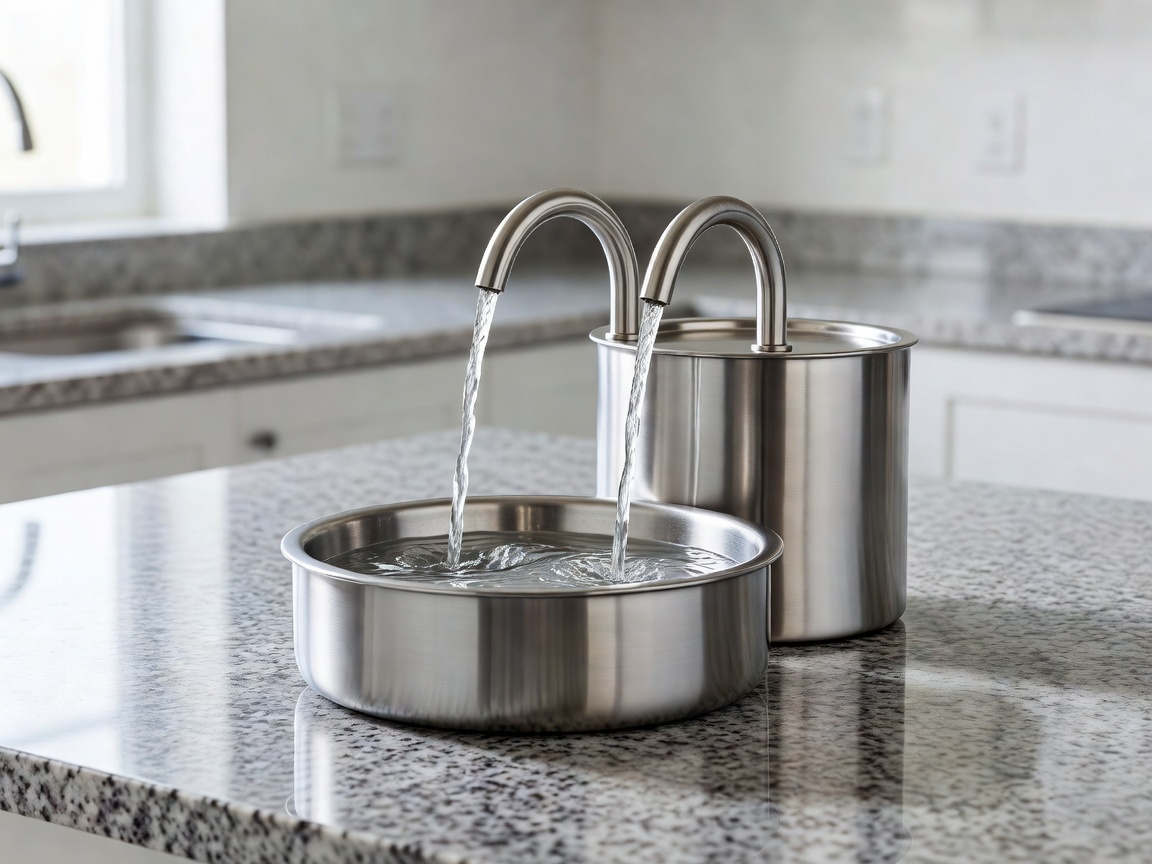
The Indestructible Choice
If you have ever dropped a ceramic bowl or watched a puppy chew the edges of a plastic fountain, you understand the appeal of stainless steel. In the realm of pet accessories, 304 food-grade stainless steel is the gold standard for durability. It is the same material used in commercial kitchens and surgical tools, prized for its ability to withstand extreme wear and tear without degrading.
Unlike plastic, which can become brittle over time and develop micro-scratches that harbor bacteria, stainless steel maintains a continuous, impermeable surface. Unlike ceramic, it will not shatter or chip if accidentally knocked off a counter while cleaning. For multi-pet households or owners of large, boisterous dogs, a stainless steel fountain is often the only material that survives long-term use.
Health and Hygiene Benefits
Banishing Pet Acne
Similar to ceramic, stainless steel is frequently recommended by veterinarians to combat feline chin acne. The smooth surface does not trap the oils from your pet's food or face, nor does it provide a textured environment for bacteria to colonize. A quick wash easily removes any biofilm (that slippery slime you sometimes feel on the inside of water bowls), ensuring the water remains fresh and hygienic.
Dishwasher Safe Convenience
One of the largest barriers to proper pet fountain maintenance is the tediousness of cleaning them. Stainless steel excels here. The vast majority of stainless steel basins and towers are entirely dishwasher safe. Once the pump, filters, and rubber grommets are removed, the steel components can withstand high-temperature sanitizing cycles, saving you time and effort.
Aesthetic and Functional Considerations
Modern stainless steel fountains often feature sleek, minimalist designs that blend seamlessly with modern kitchen appliances. However, they do have distinct functional traits you should consider before purchasing.
The Noise Factor
Water hitting a stainless steel basin can be louder than water hitting plastic or ceramic. For some pets and owners, the gentle trickling sound is a pleasant, zen-like background noise. For others, it can be distracting. High-quality manufacturers mitigate this by designing the water to flow down a slope rather than dropping directly into a pool, significantly dampening the acoustic splash.
Weight and Stability
While heavier than thin plastic, stainless steel is lighter than ceramic. If you have a large dog that likes to nudge their bowl, an empty or low-water stainless steel fountain might slide. Look for models equipped with heavy-duty, non-slip rubber bases or silicone mats to keep the unit firmly anchored to the floor.
Maintenance Guidelines
- Routine Cleaning: Wash the main basin and drinking tray every 3-5 days. If washing by hand, avoid steel wool or highly abrasive sponges, which can scratch the polished finish.
- Managing Hard Water Spots: Stainless steel shows water spots more readily than other materials. If you live in an area with hard water, wipe the fountain down with a mild white vinegar solution to dissolve calcium deposits and restore the shine.
- Pump Care: The longevity of the fountain relies heavily on the pump. Disassemble and clean the impeller weekly to prevent motor burnout caused by trapped hair and debris.
Conclusion
A stainless steel pet fountain is an investment in longevity. While you may replace the pump or filters over the years, the structural body of a high-quality stainless steel unit can easily last a pet's entire lifetime. Combining medical-grade hygiene, aesthetic appeal, and rugged durability, it remains one of the smartest choices for proactive pet owners.