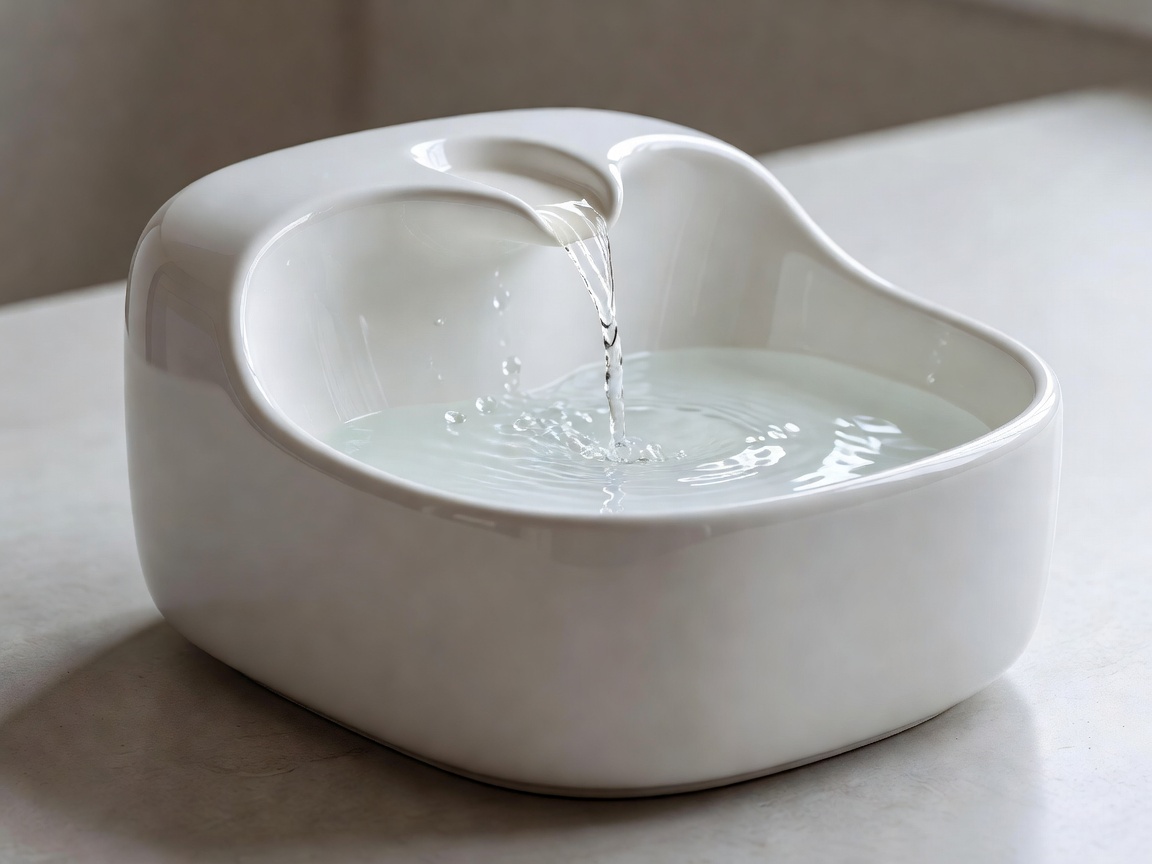
Why Material Matters in Pet Fountains
When selecting a pet water fountain, consumers are often faced with three primary choices: plastic, stainless steel, and ceramic. While plastic tends to be the most affordable, it often harbors microscopic scratches over time. These minuscule abrasions are prime real estate for bacteria to multiply, leading to the dreaded "pink slime" (Serratia marcescens) and, frequently, feline acne on your cat's chin.
Ceramic pet fountains present a much-needed solution to this problem. Fired at high temperatures and sealed with a non-toxic glaze, high-quality ceramic forms an entirely non-porous surface. This smooth finish means that bacteria have nowhere to hide, significantly reducing hygiene issues.
Key Benefits of Ceramic Fountains
1. Superior Hygiene and Acne Prevention
As mentioned, the primary draw of ceramic is its non-porous nature. Veterinary dermatologists frequently recommend switching from plastic to ceramic or stainless steel food and water bowls for cats suffering from recurrent chin acne. Daily cleaning becomes a breeze because the smooth glaze wipes down effortlessly, often without the need for abrasive scrubbing.
2. Temperature Regulation
Ceramic has fantastic thermal mass properties. It naturally remains cooler to the touch than ambient room temperature plastic. For pets living in warmer climates, or during the height of summer, a ceramic fountain helps keep the circulating water noticeably cooler. Cold, fresh water is highly palatable to both cats and dogs, encouraging increased hydration which is vital for kidney and urinary tract health.
3. Heft and Stability
If you own an enthusiastic drinker or a playful pet that likes to "dig" in their water bowl, you know the frustration of coming home to a flooded kitchen floor. Ceramic fountains are heavy. Even smaller, one-liter capacity ceramic fountains weigh significantly more than their plastic counterparts when empty, and become immovable objects when filled with water. This weight prevents tipping, sliding, and water spillage.
Considerations and Potential Drawbacks
While ceramic is excellent, it is not without its flaws. The most obvious drawback is fragility. Unlike stainless steel or plastic, a dropped ceramic fountain will likely shatter or chip. Handling them during the weekly deep-clean requires a bit more care. They are also heavier to lift in and out of the sink.
Additionally, while the ceramic body itself is dishwasher safe (always check specific manufacturer guidelines), the pumps and filters housed inside must be removed and hand-washed. Furthermore, over time and with aggressive use, micro-chips can occur in the glaze. If the underlying porous clay is exposed, it can trap bacteria, negating the material's primary benefit.
Maintenance Best Practices
- Weekly Deep Cleans: Disassemble the fountain entirely. Wash the ceramic pieces with hot, soapy water or place them on the top rack of your dishwasher.
- Pump Maintenance: The motor is the heart of the fountain. Disassemble the pump weekly to remove pet hair and saliva buildup from the impeller.
- Filter Replacement: Most ceramic fountains utilize activated carbon filters. Replace these every 2-4 weeks, depending on the number of pets using the fountain and their shedding levels.
- Descaling: In hard water areas, calcium deposits can build up on the ceramic glaze. Soak the affected areas in a 50/50 mixture of white vinegar and water for 30 minutes before scrubbing gently.
Choosing the Right Ceramic Fountain
When shopping for a ceramic fountain, consider the drinking interface. Many cats suffer from "whisker fatigue," a sensory overload caused by their sensitive whiskers constantly brushing against the sides of deep bowls. Look for fountains that offer a wide, shallow drinking basin or an elevated tower that allows them to lick water directly from the falling stream without touching the sides.
Ultimately, a ceramic fountain is a stylish, hygienic, and sturdy investment in your pet's health. While the initial cost may be slightly higher than entry-level plastic models, the longevity, cleanliness, and peace of mind it provides make it a top-tier choice for discerning pet owners.